
Dubois County Free Press: LifeSpring Health Systems recipient of $25,000 donation to support youth mental health
Dec 11 2025
You might be feeling it already: the winter blues—sapped energy, anxiety, irritability and sadness. You’re sleeping too much or can’t sleep soundly through the night. Your appetite and cravings have shot up or dropped off and you’re spending way too much time staring at a phone, computer monitor or TV.
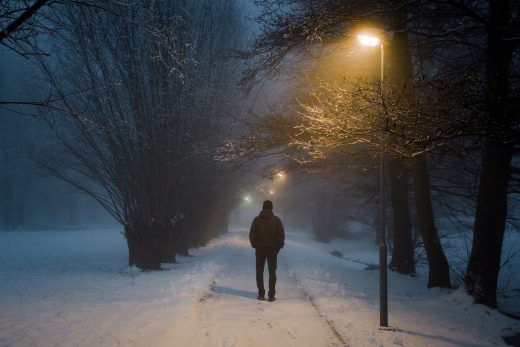
We’ve entered Dark December, when the total number daylight hours in a single day reach their lowest—slightly more than 9 hours around Dec. 21st or 22nd. That’s followed by about three months of mostly cold, snowy, gray weather, conditions that can have serious consequences for our behavioral health and emotional wellbeing.
“Where we live in the world, it gets very difficult in terms of the weather, and the sun setting earlier,” said Dr. Robert Beedle, a Supervising Psychologist with Regional Health Systems. “The cold weather can oftentimes drive us inside and make us feel more limited in what we can do, compared to summer.”
The winter holidays play a role, too, he said. Christmas often ratchets up pressure, and the end of the year leads to self-reflection and thoughts that we fell short of what we wanted to achieve. Melancholy can set in.
“We can be a little more sedentary,” Beedle added, “a little more immersed in our thoughts or emotions and if we’re not happy with the way things are going in our lives or in the world in general, it can add up to more of a challenge than it would in the spring, summer or even fall.”
All that can lead to a condition first identified in 1984 and formally recognized by the American Psychiatric Association in the late 1990s: seasonal affective disorder, or SAD. It’s brought about by a decrease in our exposure to sunlight. Symptoms include depression, which can show up as sleeping too much or having difficulty falling and staying asleep; lower energy or enthusiasm; even anxious, ornery moods. The most serious manifestation is suicidal thoughts.
About 5 percent of people in the U.S. suffer from SAD. Women are more likely to develop the condition than men.
Research indicates that sunlight carries a wave of health benefits—from Vitamin D’s contribution to tissue repair and prevention of cancers to sunlight’s crucial support of behavioral health and emotional wellbeing.
The key to navigating the time of the year when sunlight is minimal, Beedle said, is accepting that it’s going to occur and making a plan.
“The most important thing is to do that sooner rather than later,” Beedle said. “You want to try and stay a little bit ahead of that slowdown or symptoms of SAD.”

The plan should embrace a balance of activities, including bundling up and spending time outdoors and connecting with people in our lives in different ways. Getting together for a meal is one approach. Planning a relaxed conversation over the phone or on a video communication platform is another. Focusing on a balanced diet and making sure you exercise regularly also are important.
So is participating in activities that stimulate and strengthen the mind—reading, playing games, even researching a topic that interests you—and scaling back screen time. Volunteering also is uplifting, as is checking on the wellbeing of people you care about.
“A lot of people wait until New Years to have resolutions,” Beedle said. “But we don’t have to wait until then to adopt healthy habits. All these things are going to be good for our mood and our body. They’re going to buoy us through the seasonal part of this and the stress that can surface during the holidays.”
Taking that active approach requires us “to step up our motivation, knowing that it’s different than summer,” he added. “It might be a little bit harder to access things. We have to push a little bit and know that we’re going to have to do things a little differently.”
One note of caution: Don’t overdo it. Avoid over-scheduling. Make sure to set aside time for rest and self-care.

Another aspect related specifically to winter holiday stress is that different age groups can experience different emotions and challenges about the holidays, Beedle said.
For some adolescents and very young adults, the holidays can disconnect them from friends, which can generate annoyance and irritability. Middle-aged people who are engaged in careers and perhaps parenting children can be overwhelmed—and burned out—by end-of-year work projects stacked atop holiday responsibilities. For older adults, the holidays can create sadness and grief over past winter holidays shared with now-deceased loved ones or traditions that have ended.
“It’s important to recognize that, depending on where we’re at in our lives, this season might mean different things or bring different emotions,” Beedle said, “and that can be difficult when we’re trying to connect with someone in a different stage of life.”
Other helpful strategies include “light box” therapy—exposure to broad spectrum, bright light for about 30 minutes in the morning—medication or counseling.
Finding help
If winter blah symptoms linger for longer than two months or if you notice that the symptoms are affecting your ability to function in everyday life, it’s probably worthwhile to contact a professional. Regional Health Systems, which offers a variety of behavioral health services, can connect individuals with counselors. Call 219.769.4005 and request an intake for therapy or behavioral health services.
“People should be aware that they’re always free to try a service and there’s no obligation to continue if it’s not helpful,” Beedle said. He noted that the longer a condition goes untreated the more difficult it becomes to resolve.
“Our techniques are improving all the time,” he said. “In some cases, two or three months of therapy can be very effective and might be all that’s needed.”