
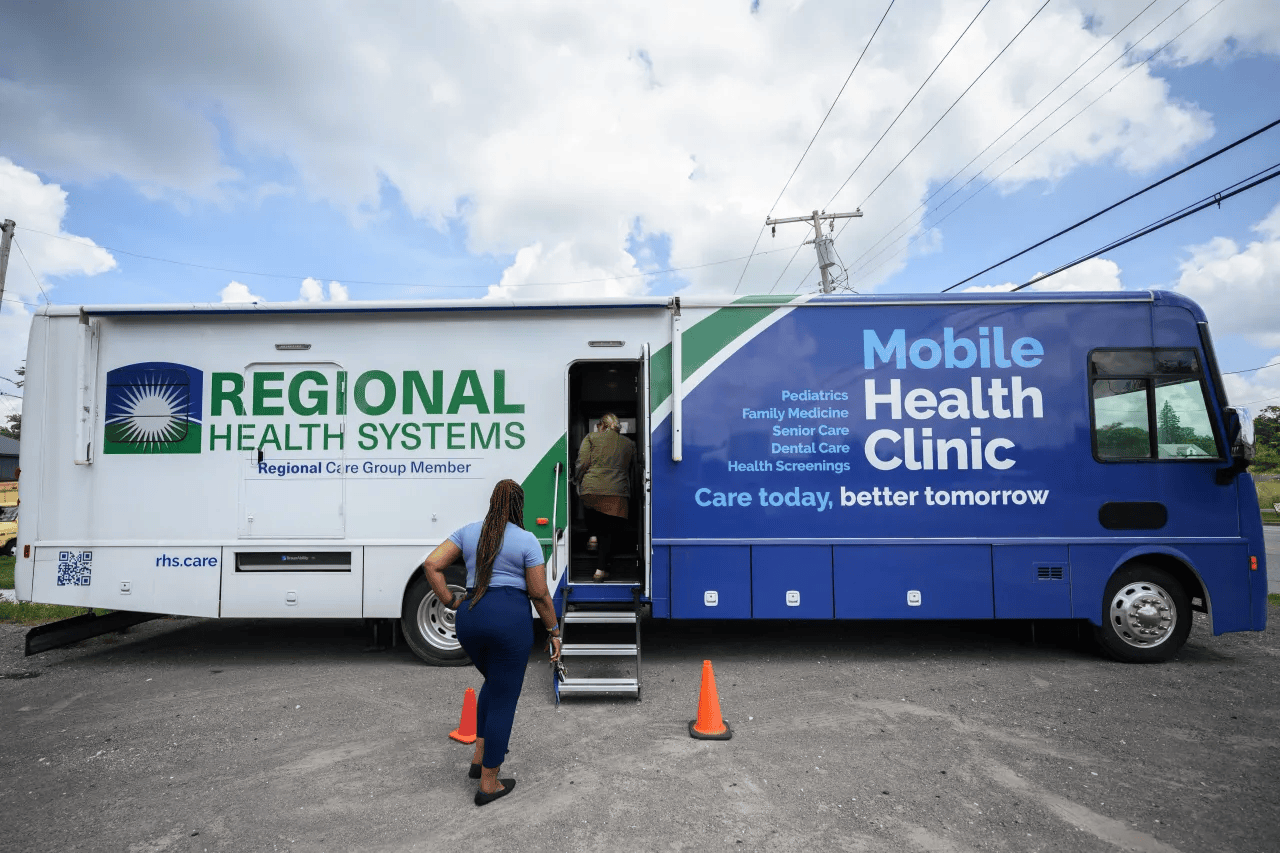
Post Tribune: Gary Harm Reduction works with local agencies to provide services
Jul 23 2025
It’s a pretty challenging time to be a parent.
One complicating issue that has emerged in recent years is what’s known as vaccine hesitancy—a reluctance, especially among parents of young children—to have those children vaccinated. It’s become particularly strong since the COVID-19 pandemic.

And it’s probably about to be discussed a little more widely. Schools will reopen next month, prompting parents to start considering required vaccinations for their children.
Dr. Rujuta Gandhi, Medical Director of Primary Care at Regional Health Systems, has noticed a decline in the number of parents having their kids vaccinated, a trend that started during the pandemic, when visits to doctors’ offices dropped significantly largely because the offices were closed for a time.
“So, we saw this decrease in vaccination,” Dr. Gandhi said. “Unfortunately, it never really picked back up.”
Kids have returned to their doctors, she added, but misinformed parents increasingly are expressing concern with vaccine safety.
“I will say that no medical association agrees with the misinformation that is out there – some of it from the new administration in Washington,” she said.

That point was underscored early in July when several major medical organizations, including the American Academy of Pediatrics and American College of Physicians, filed a lawsuit against the Department of Health and Human Services and Secretary Robert F. Kennedy Jr. The suit contends that the vaccine changes the department is imposing are “unlawful” and “unilateral.”
At the same time, data released July 9th from the Centers for Disease Control and Prevention shows that more cases of measles have been reported this year than any year since 2000, when the disease was considered eliminated in the U.S. – in part though high, widespread vaccination rates.
“It’s really unfortunate,” Dr. Gandhi said, “because parents get caught in the middle. This misinformation kind of pits parents and families against their doctor. Your doctor is not your enemy,” she added. “We’re here to help keep your family safe.”
Studies have reviewed reasons parents use to decline or delay vaccinating their children.
A 2016 article in the Journal of Pediatric Pharmacology and Therapeutics reported that those reasons fall into four broad categories: religious; personal or philosophical beliefs; safety concerns and a desire for more information from healthcare providers.

Eight years later, an October 2024 Centers for Disease Control report stated that the most common reasons parents used for declining the COVID vaccine in the fall and winter of 2023 were side effects and safety of the vaccine; belief that their child was unlikely to get very sick from COVID and belief that the vaccines didn’t work very well.
Dr. Gandhi has heard those and many wildly mis-informed statements: that vaccines cause autism, for example, or that doctors receive kickbacks for administering vaccines. Both have been debunked completely.
When parents do express reluctance, Dr. Gandhi said, she talks through those concerns, answers questions and tailors advice to the individual families.
“Some parents will say, ‘I don’t want my kids to get all these vaccines at once,’” Dr. Gandhi said. “Okay, we’ll do a modified schedule then.”
Parents also have expressed a preference for allowing their children to build up natural immunity by contracting illnesses such as chicken pox or measles.
Dr. Gandhi acknowledged that many children would endure those infections and achieve natural immunity without significant health risks. A certain percentage, however, will experience sometimes severe, life-threatening complications and it’s unclear which children will have which experience.

“We honestly don’t know how an infection is going to play out in any given individual,” she said, “especially with some of these viral infections, like measles, where antibiotics won’t work and no approved antivirals exist. That’s what makes this dangerous.
Vaccines’ power, Dr. Gandhi added, is that they mimic an infection to engage the body’s natural defenses without the individual experiencing the dangers of a full-blown infection. Although a vaccine may cause discomfort for a day or two, its protection can last a lifetime.
And, public schools require students to receive a variety of vaccines to attend classes. Depending on the student’s age, those include vaccines against the flu, diphtheria, tetanus, and acellular pertussis (DTaP), measles and meningitis.
An effect often referred to as herd immunity or population immunity is another important aspect of vaccines, Dr. Gandhi added. It occurs when enough people in a population are immune to a disease, through vaccination or natural immunity, so a disease can’t move from person to person through the population. Vaccines are the safest way to build herd immunity.